

My beautiful wife scored 204 in a bowling game last week (Feb 2024)
and as promised, I had to make her a trophy. Out of a small log of Jacaranda, I turned the bowling pin and left some of the bark on the base as a feature. Lucky for me … she loved it.

I needed a pencil jar for my desk so I glued 6 pieces of hardwood together and turned out a simple jar.

This is Orange wood. Apparently grows in Texas America and was used by the local indians as a dye for face makeup. Turning this piece resulted in the shed covered in orange dust and my hands stained in the orange dye. This is my Lolly Jar, or supposed to be my Lolly Jar but i’m not keen on eating orange stained minties. In the end I spray varnished the piece with polyurathane semi gloss and that sealed the timber beautifully. This won third prize in the Mudgeeraba show June 2024.

I’ve had this Burl for over a year and couldn’t decide what to make from it. With the help of my friends at woodturning I fashioned a beautiful holder for my fountain pen that was a gift from Dick McMorron on my retirement from BigW. The pen is a Porsche design from Germany and a treasured item.

Oregon Bowl. Found this piece of wood hidden in the back of the shed at the woodturners club and I turned it into this lovely bowl. The grain is amazing and in order to get a good finish, I hand sanded along the grain to eliminate any fibre tears. Polished with Aussie Friction Polish. This won First prize at the Mudgeeraba Show in June 2024.
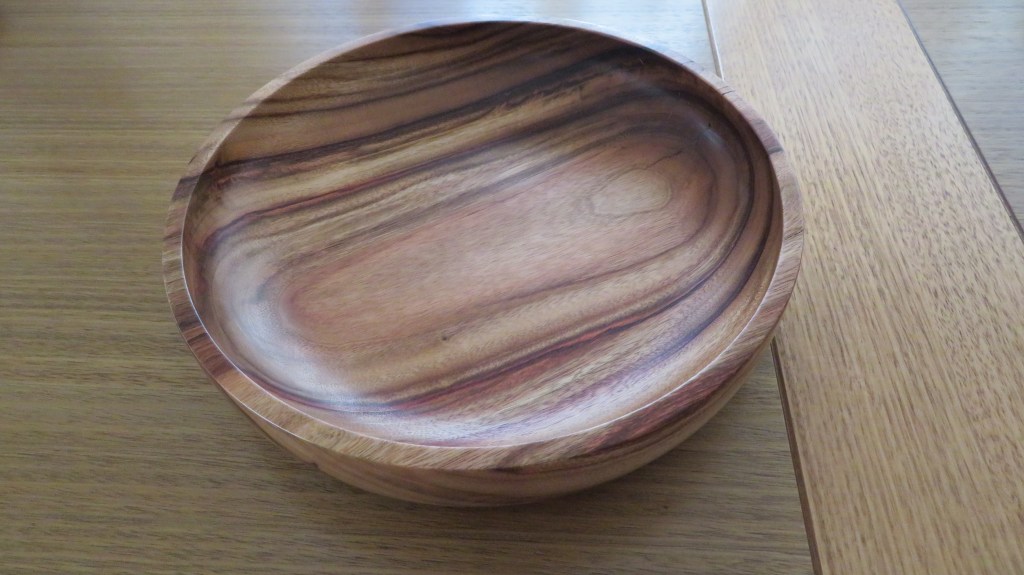
I had a large piece of Camphor Laurel and turned it into this lovely shallow bowl. The bottom on the inside was super flat and showed off the grain. Finished really nicely with Friction Polish.

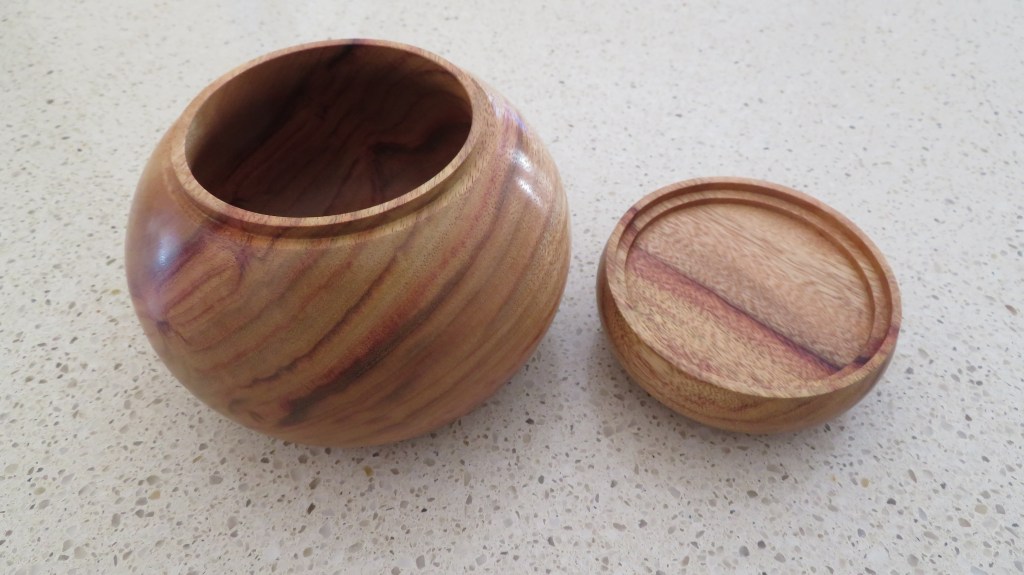
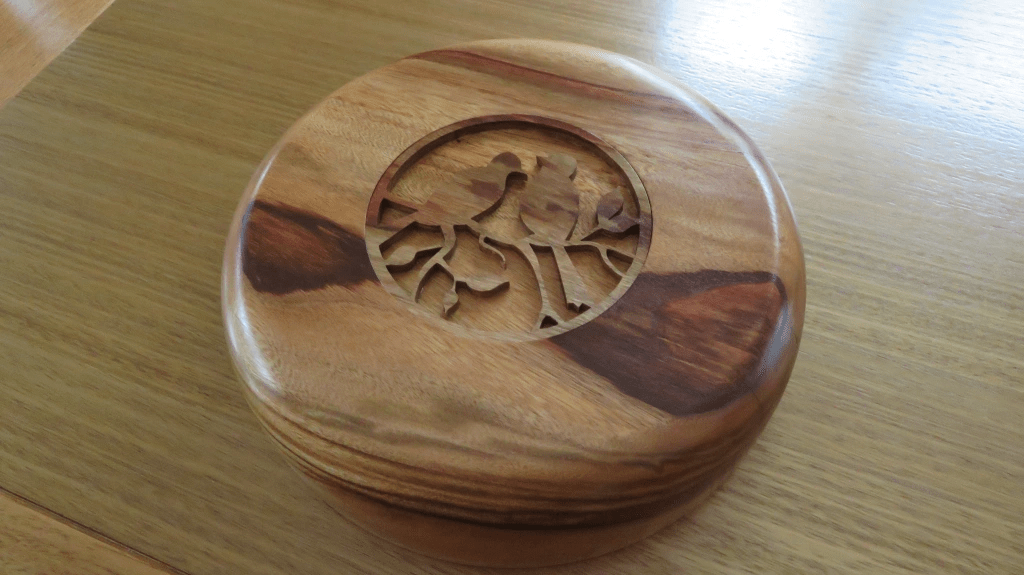
This bowl (container or jar) was turned as a “Cross Cut” piece from a block of Camphor Laurel in a training session at the club in April. In addition, the lid had two inlaid pieces carved into it as you can see from the first photo. The first inlay ended up as a 2mm ring and the second inlay is the top with completely different wood and a grain.
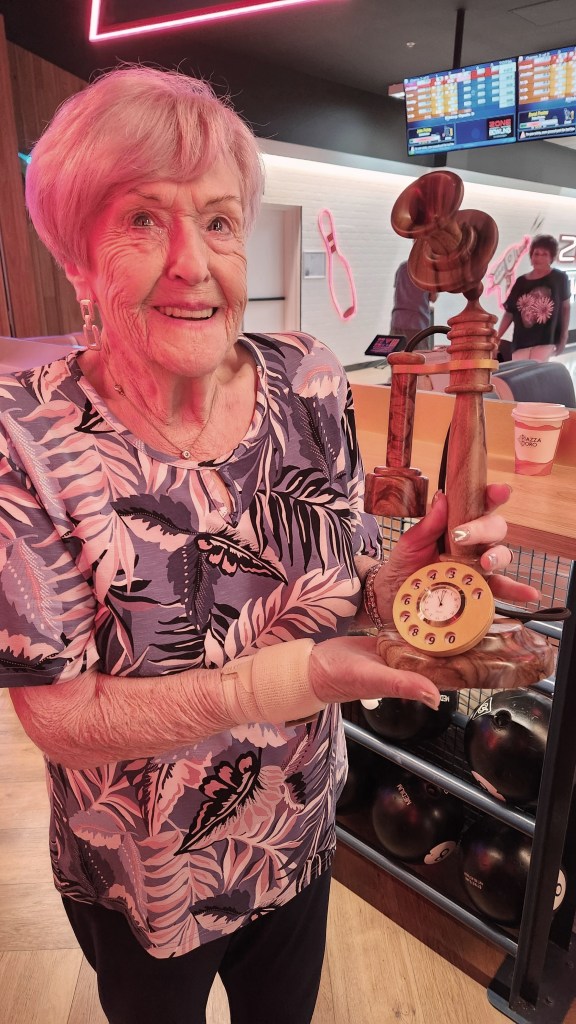
Yvonne requested a Candlestick Phone as it reminded her of the phone her parents used. It’s made out of Camphor Laurel to show off the wonderful grain and polished with friction polish. The time piece in the middle of the dial is only to make it a little more useful rather than just an ornament. It was a pleasure to make it for her and presented to her on 19th April. I think she liked it. Yvonne is a legend. In her 90’s and still 10 pin bowling.

A couple of bowls turned from Purple Wood. Very hard wood that has purple and green patches. The softer green segments changed colour once polished to a darker brown but the purple was still evident. Heavy, solid and beautiful.
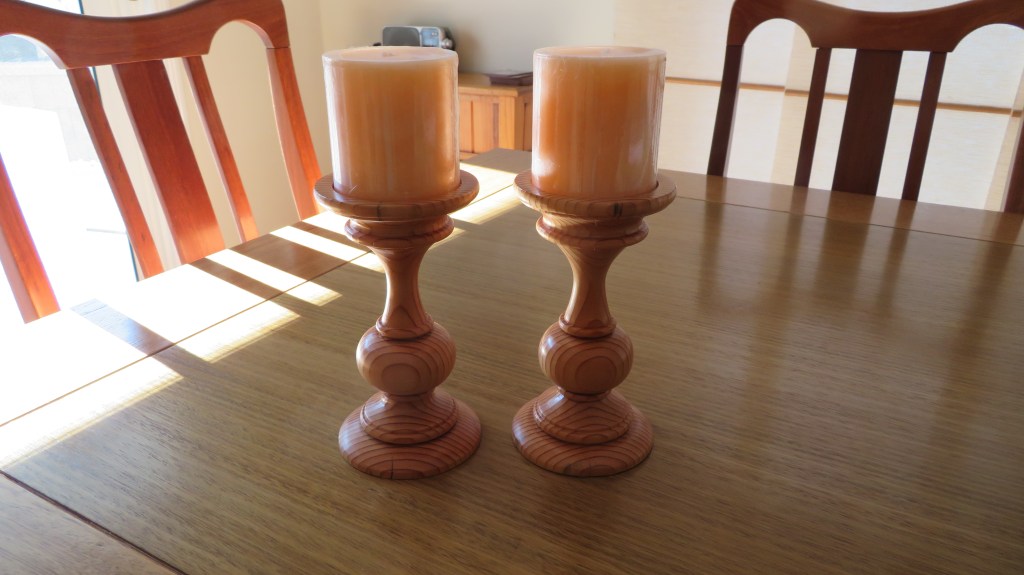
Twin Candle Holders turned from two Oregon Pianola legs. A friend of mine had an old Pianola that unfortunately had some weather damage. We pulled it apart and I salvaged the supporting legs which by now would have been around 50+ years old. Sadly it was wide grain Oregon, easy to turn but hard to finish smoothly. They make a great dinner table compliment for our next special occasion dinner. This won First prize at the Mudgeeraba show in June 2024.
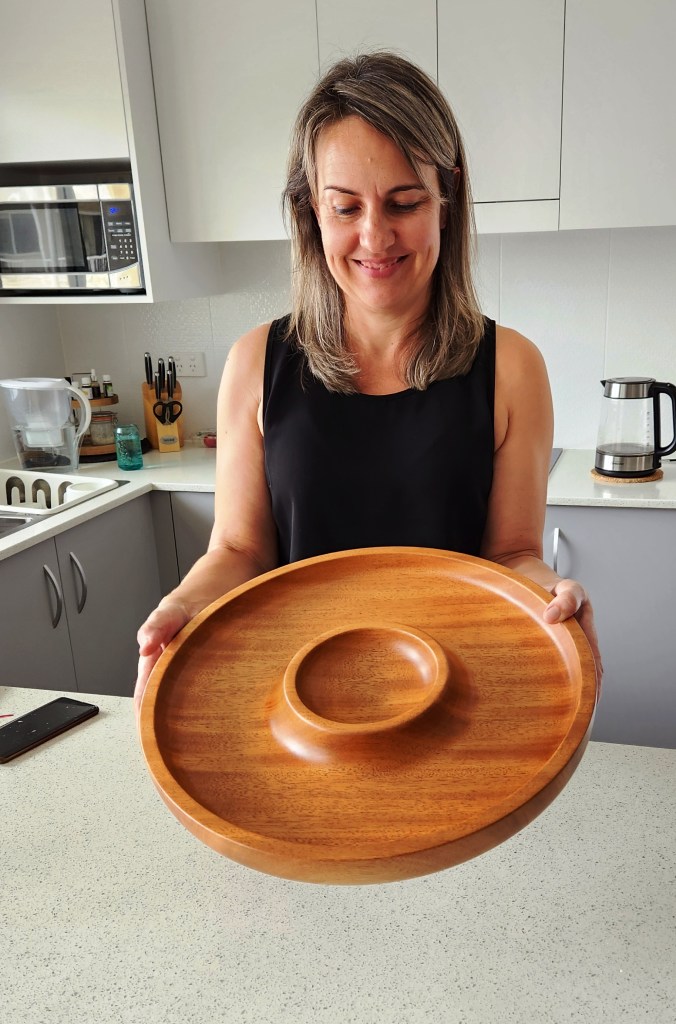
Janine is the happy recipient of this lovely platter. It’s the first one I have ever made this large and most of it was done at the Woodworkers Shed. The wood is African Mahogany or “Khaya” and it was difficult to sand down the end grain. In the end I had to sand by hand following the grain. The platter was finished with spray varnish.
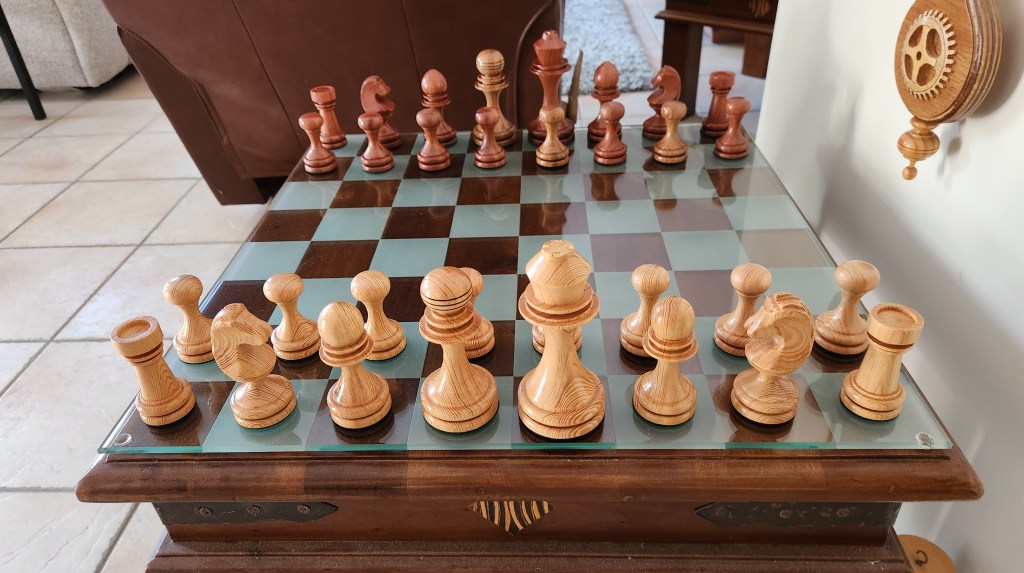
Finally finished this larger sized chess set in late August. Not tournament size, probably 20% larger. The chess board has 70mm squares whereas tournament boards measure 57mm squares. I just love a bigger set. The dark pieces are from red gum and unfortunately you cannot guarantee consistent colour as the tree grows. Nature is the boss, so some of the pieces are a little lighter. The white pieces are from close grain oregon. This set has a new design for the knights, a different queen and king head configuration and the rooks don’t have grooves cut into the top. That’s the whole idea of turning your own set, it’s my design.
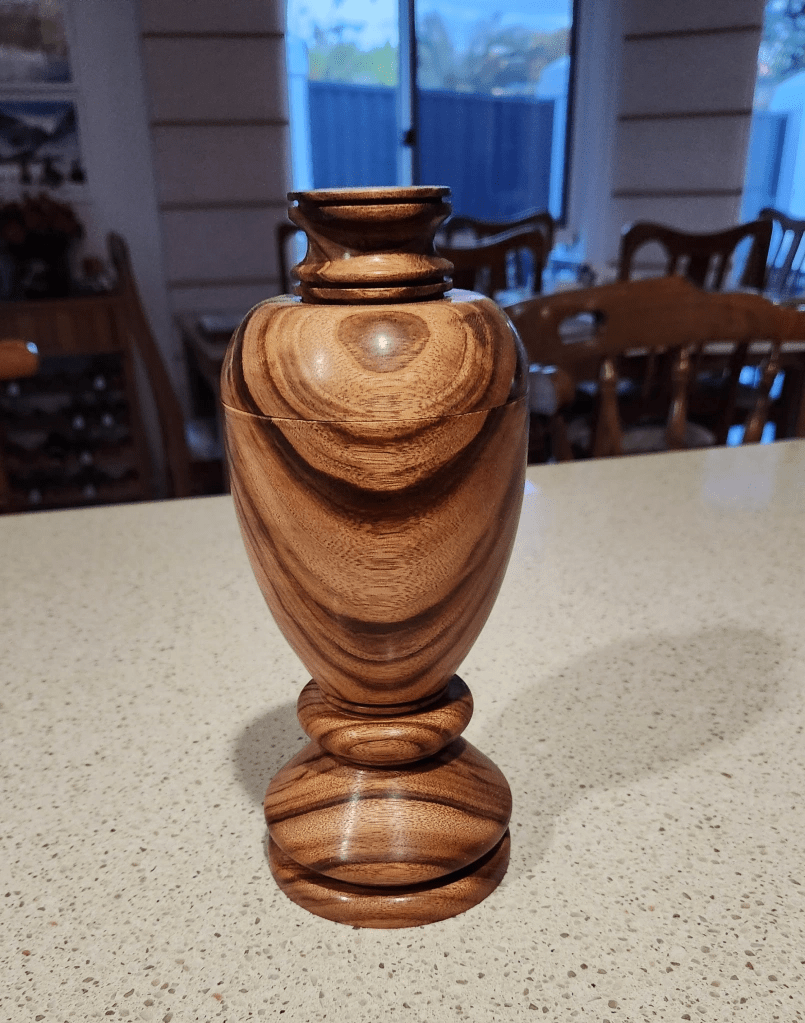
This is a Camphor Laurel Jar and Lid finished early September. I sealed the timber then used friction polish as a finish. Rather a large piece of wood that had some flaws inside that were only exposed after turning the log down. However, it finished off quite well. It stands about 240mm high and is 100mm round at the lid. Camphor Laurel has such a lovely grain pattern once you start cutting into the log.
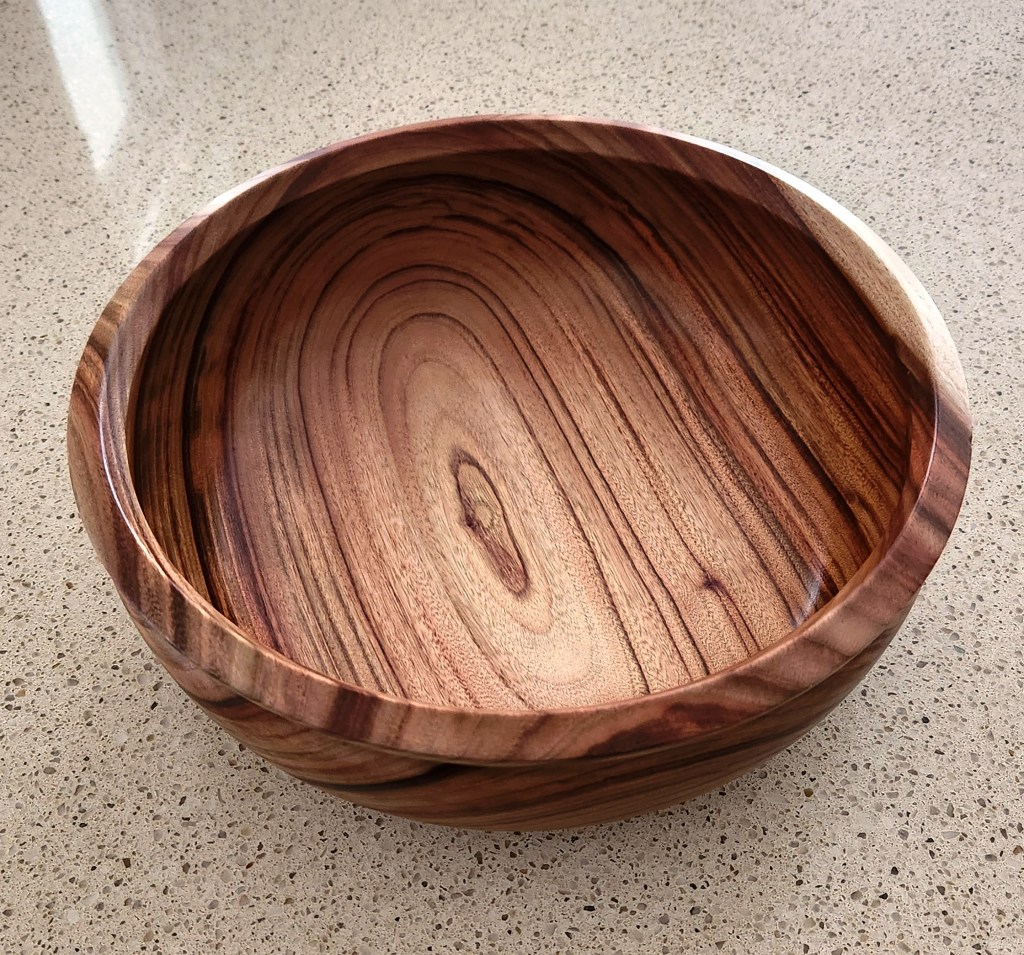
This bowl is quite large. I had to turn it at the Woodturners Shed as it was too big for my lathe at home. It took 3 weeks to turn this Camphor Laurel slab into a beautiful bowl showing off all the grain and colour, then finished with wood sealer and spray varnished with semi gloss varnish. This is now our fruit bowl and sits proudly on the kitchen bench. It was also awarded First Prize in the Mudgeeraba Show for 2025.
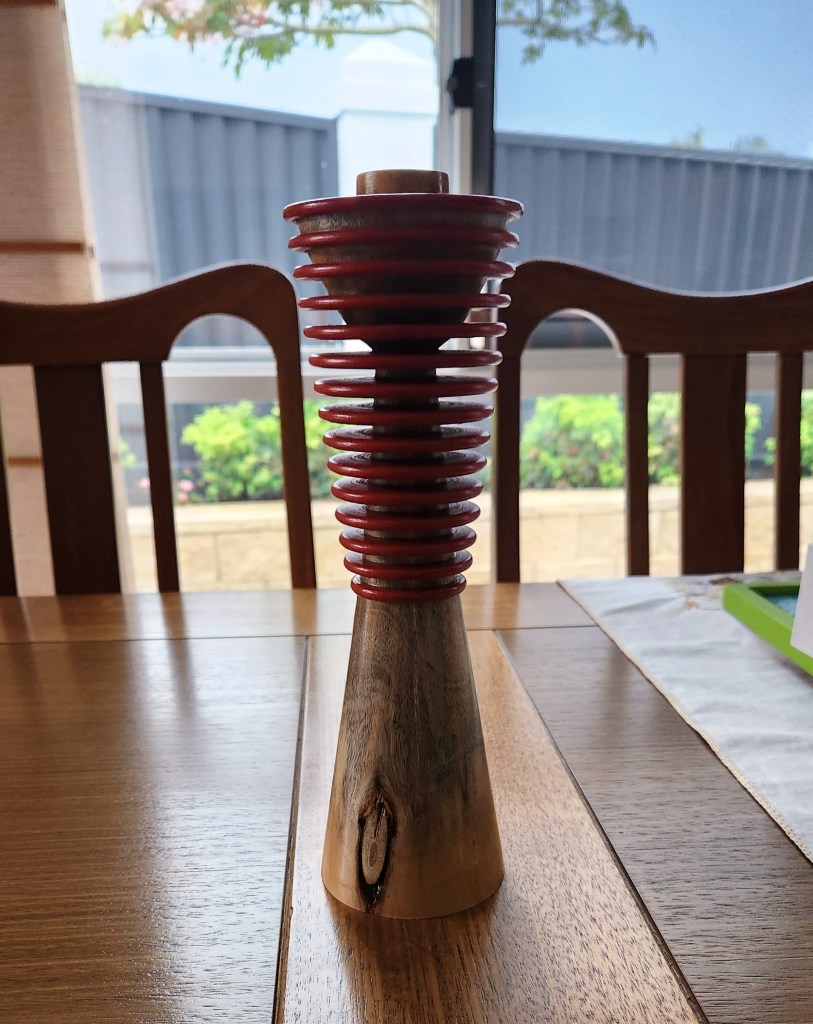
Early October ’24 and this idea of turning two shapes in one intrigued me. It turned out to be far more difficult than I imagined. Trying to get the paint all the way to the bottom of the deep cuts, without spilling onto the base – wow, that was touchy. After three attempts it didn’t turn out too bad. I inserted a candle holder into the top and it should look great on the dinner table and certainly a talking point. Made out of a rather plain piece of Camphor Laurel. To get the angles on the deep cuts I had to reshape a chisel each time. My woodturning buddy Steve, kindly lent me an old one he had tucked away. It was also awarded Third Prize in the Mudgeeraba Show for 2025.
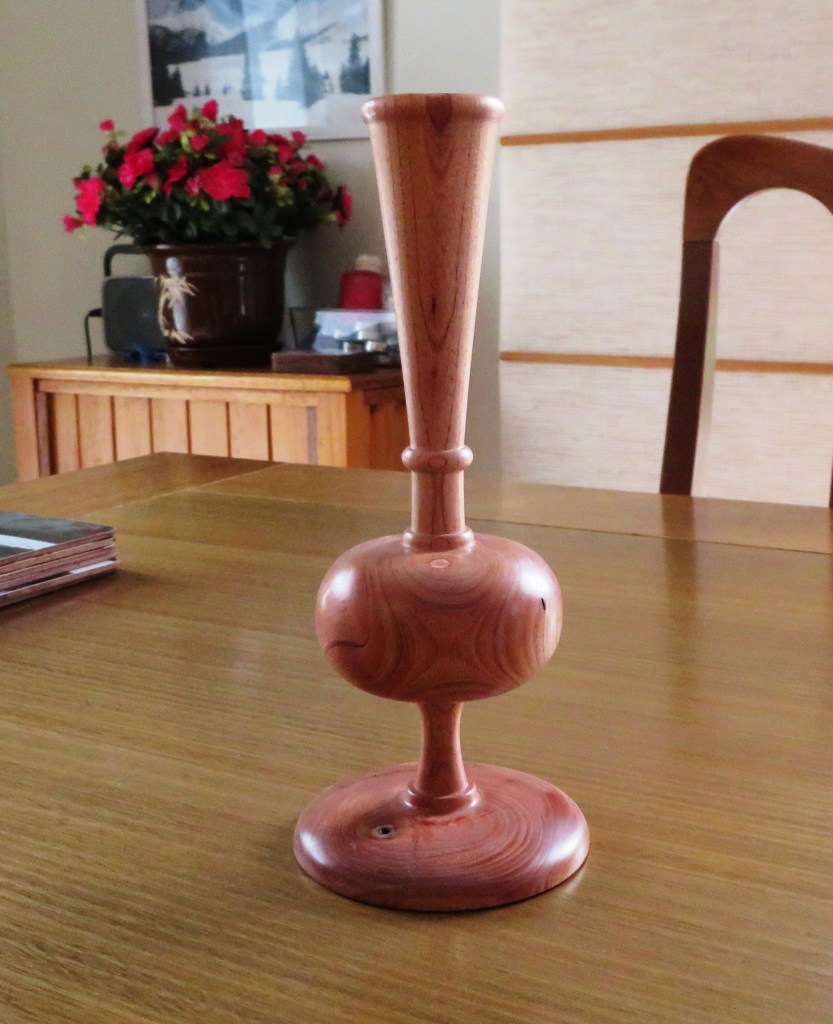
Mid October: We were watching an old movie the other night and in the background was this vase shape but it actually was a table lamp. I paused the movie and took a poor quality photo, then scaled it up to 200mm high and drew the model on Sketchup program. It took 2 weeks to turn and polish. The wood is Australian Red Cedar which it quite grainy and porous. I sanded it down to 600 grit then polished it with Carnauba Wax – 2 coats. It was a beautiful smooth finish. Carnauba wax comes from the fronds of a carnauba tree, found in Brazil. The trees’ leaves are dried and beaten to release the wax, which is then bleached or refined for a variety of uses. This harvesting process doesn’t harm the tree, and because of its source, carnauba wax is categorized as a natural plant wax.

Mid October and I needed a change from turning chess pieces. I had a small tree limb of Silky Oak, cut it in half and made a Wood Pecker out of the other half. Turned it in two pieces with a tooth pick for his leg. A bit of a fun project that I had been wanting to do for a while.
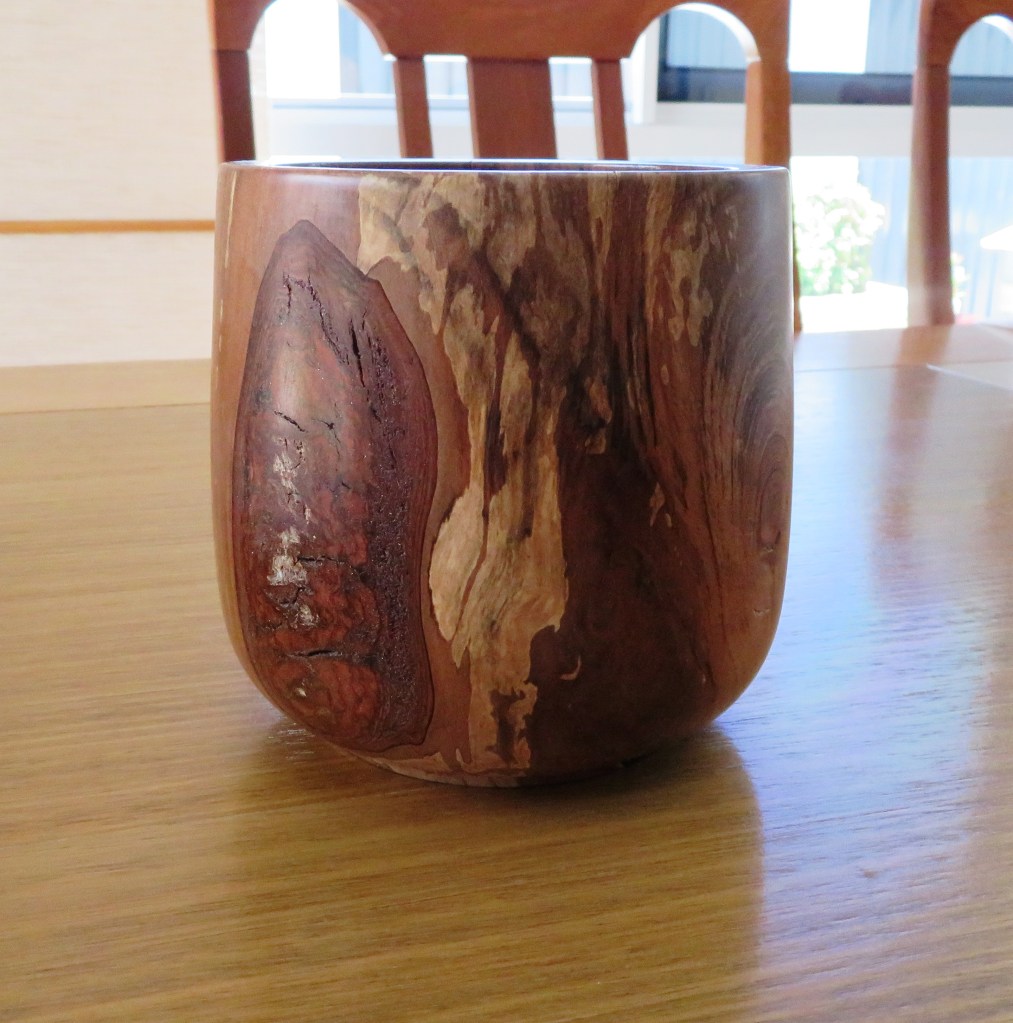
A really textured piece of Avocado still showing some of the bark (Left Hand Side) that I managed to retain. Beginning of November and I finished this piece off after lots of advice from my local woodturning group. The outside finish is Danish oil applied with a cotton cloth – 3 coats, and the inside is high gloss marine varnish in an attempt to make it a more durable finish to allow for it to be used in the storage of trinkets.
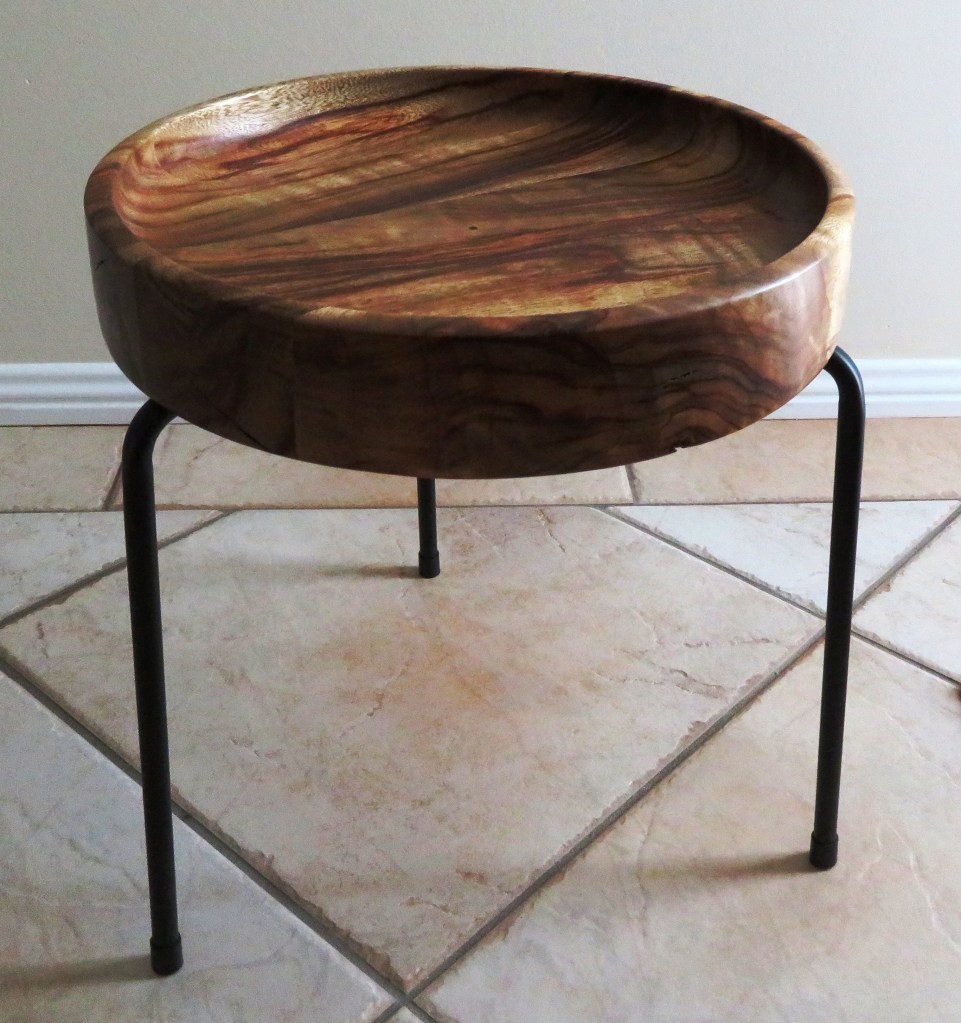
Mid November and this is a Camphor Laurel Bedside Table. The top doubles as a platter or a shallow fruit bowl. It consists of 5 pieces of Camphor Laurel glued together then turned as I didn’t have a single piece of wood large enough to fit the stand. It’s very solid and lots of texture.
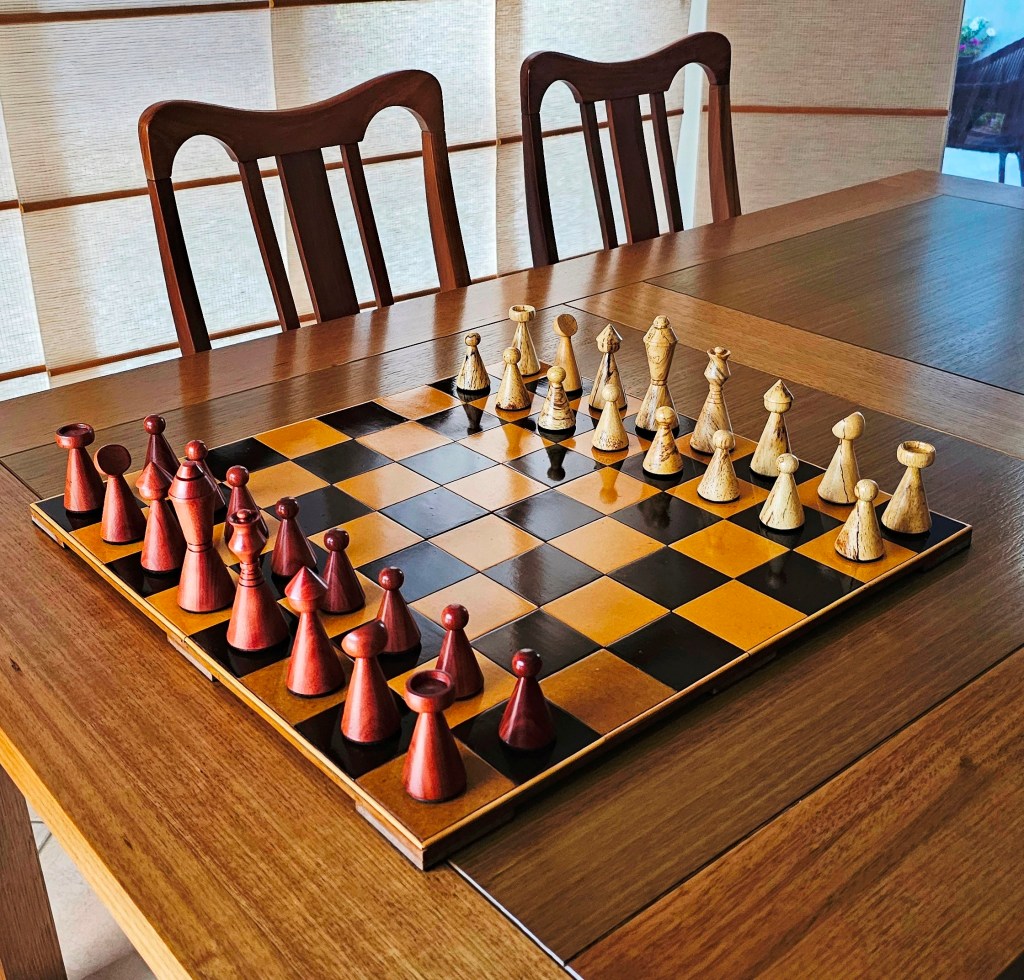
A completely new design for a chess set inspired by Nina, a lovely lady who herself is renowned in the ‘weaving’ world. The white pieces were made from Hoop Pine with spalting through each piece to really give them character. The Dark pieces were turned from Red Gum. The board is put together from pieces of MDF cut into 65mm squares so it is a rather large version of a chess set. As a guide, competition chess is usually played on a 57mm – 60mm board so this set is about a third larger and a lot more enjoyable to play with. I started designing this set in July and it was a celebration to finish it mid November ’24.

Beginning of December 2024 and I found this lovely piece of Hoop Pine with spalting all the way through it. I finished it off with Satin Spray Varnish and the colours just popped out. Such a remarkable contrast in colour between the wood and the fungus.
 Woodworking in Retirement